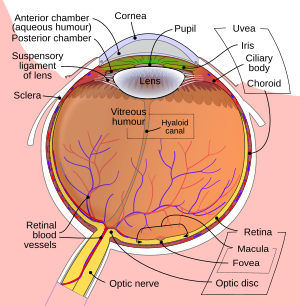
Intraocular hemorrhage is bleeding (hemorrhage) inside the eye (oculus in Latin) . It may be the result of physical trauma (direct injury to the eye) or other diseases, injuries or disorders (such as diabetes, hypertension, or shaken baby syndrome).[1] Severe bleeding may cause high pressures inside the eye, leading to blindness.
Types
The types of ocular hemorrhages are classified based on where the bleeding is occurring:
- Subconjunctival hemorrhage (bleeding just underneath the conjunctiva)[2]
- Intraocular hemorrhages:
- Hyphema (in the anterior chamber)
- In the posterior segment of eyeball:
- Vitreous hemorrhage (into the vitreous)[3][4]
- Subretinal hemorrhage (under the retina)
- Submacular hemorrhage (under the macula)[5]
Causes
Different causes may cause bleeding in different locations.
- Terson's syndrome (as a result of subarachnoid hemorrhage)
- Hemophilia (a severe bleeding disorder, usually hereditary)
- Anticoagulants and thrombolysis (medication to reduce blood clotting tendency or to disperse blood clots, respectively)
The major causes of bleeding are injury diabetes mellitus hypertension.
Diagnosis
Intraocular hemorrhage is typically diagnosed with slit lamp examination.
| This article uses material from the Wikipedia article Metasyntactic variable, which is released under the Creative Commons Attribution-ShareAlike 3.0 Unported License. |