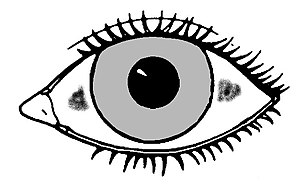
Bitot's spots are the buildup of keratin located superficially in the conjunctiva of human's eyes. They can be oval, triangular or irregular in shape. The spots are a sign of vitamin A deficiency and associated with drying of the cornea. In 1863, the French physician Pierre Bitot (1822–1888) first described these spots.[1] The spots may abate under replacement therapy.[2] In ancient Egypt, this was treated with animal liver, which is where vitamin A is stored.[3]
Causes
Major cause of Bitot's spot is vitamin A deficiency (VAD).[4] Rarely, pellegra due to deficiency of vitamin B3 (niacin) may also cause Bitot's spots.[5]
Treatment
VAD is commonly treated with oral vitamin A supplements.[6] Improvement of Bitot's spots is seen with high-dose vitamin A therapy.[7] Bitot's spots non-responsive to vitamin A therapy may be removed surgically.[8]
| This article uses material from the Wikipedia article Metasyntactic variable, which is released under the Creative Commons Attribution-ShareAlike 3.0 Unported License. |